UPDATE


Hi. This is an old, unmaintained blog. You may find these sites more to your liking:

Carson Brackney: This is my primary site.

Ad Astra Traffic: Content production/article writing service.

Ad Astra Traffic Team: For those who'd like to get writing gigs with Ad Astra.


Showing posts with label Saturday ramblings. Show all posts

Sunday, August 20, 2006

Saturday's Ramblings...Sunday seems like a good time to handle this...On the perils of creating schedules...

I very recently decided to implement a "schedule" for the Content Done Better Blog (see: 200...Thanks for Reading).

According to that schedule, which I optimistically placed on the right sidebar, Saturday is my day for any ramblings that might not be "on topic" with respect to the content writing industry. I wanted to give myself a little leeway in terms of what I discuss here and thought that if I carved out a little Saturday turf, I wouldn't feel weird about adding opinion like I did with the O'Reilly and Bukowski posts.

Anyway, that's supposed to happen on Saturdays. Today is Sunday. It was also Sunday when I got around to writing Friday's "thumbs up/down" thing.

I said I was going to run with the "schedule" for a month. So far, I am not off to a great start!

Monday, August 14, 2006

Back a day early...Factotum fears…It’s never as good as the book…Sacred texts getting the Hollywood treatment…On Bukowski…

I'm back to the blog a day earlier than planned.

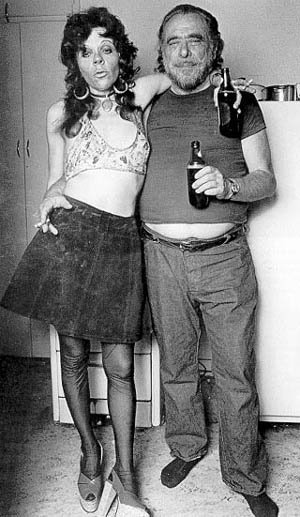
The last post before I went on my brief hiatus featured a quotation from Hunter S. Thompson, one of my favorite writers. I’m starting up again right where I left off. I promise to get this blog back on the content writing and copywriting industry, but first I have to spend a few minutes on another of my favorites, Charles Bukowski.

Although I think it has been completed for over a year, a new movie is being released this month: Factotum. It’s derived from the Bukowski novel of the same title. Matt Dillon is playing Bukowski‘s alter-ego protaganist Henry Chinaski. No, seriously. The same Matt Dillon adolescent girls once swooned over back in The Outsiders days portrays the grizzled, acne-scarred author.

I know Matt Dillon has come a long way from The Flamingo Kid. I haven’t seen Crash, but I heard he was great. I can think of a few other Dillon movies that I enjoyed, including Drugstore Cowboy. Seriously, though, how can you not have reservations about a movie who plans to feature a former teen heartthrob as a thinly-disguised version of Bukowski. Dillon first, then Bukowski:


That’s a stretch.

The movie might clear that hurdle. And to be honest, it isn’t really fair of me to get too worked up over Dillon. After all, Barfly was my introduction to Bukowski/Chinaski and that particular 1987 flick featured Mickey Rourke, who actually acted with Dillon in Rumble Fish, which like The Outsiders is an adaptation of a teen novel by SE Hinton. Rourke, however, was never the pretty boy Dillon was. Plus, they dirtied him up for Barfly:


The whole Matt Dillon thing is only one of my worries, however. I am, not surprisingly, suffering from the “it won’t be as good as the book” blues. We all know that feeling. You loved the book, you see the movie, you leave incredibly disappointed.

That’s always a drag, but it means a little more than usual for me with this one.

I’ve always had an inkling that I’d like to be a writer, but I had reservations. Writers, part of me believed, produced masterpieces with flawless punctuation, a soft lyrical beauty and a certain ethereal eloquence. I didn’t know if I could do that but I was certain that I didn’t want to try. I felt that kind of thing would be dishonest coming from me.

Somewhere along the line, I found Bukowski, Thompson, Fante (via Bukowski) and a handful of other saltier, more bare-boned writers who helped flip a switch inside my head. Books like Factotum aren’t just things I like to read. They helped re-shape my very relationship with reading, words and writing.

All of us have books, songs or movies that we relate to on that deeper level and we begin to feel like we own them as much as the author or anyone else. They are part of us and the idea of someone tinkering around with them is a lot like having them reach a hand into our guts. It’s a trespass. It feels wrong and dangerous.

Another weird side effect of loving a book is that you adopt the writer. At least I do. I feel an obligation to protect and explain those writers who mean something to me. Just ask my wife. I was crestfallen and delivered a long extemporaneous explanation of why Milan Kundera was so wonderful after she put down my copy of Immortality and said she didn’t really care for it. I rallied to the old Czech’s defense as if I was being personally assailed.

With Bukowski, I really get that urge because I think he’s misunderstood. I think people, including both his offended critics and many of his wannabe gin-soaked fans, take him at face value.

The critics see him as a foul-mouthed, drunk brute with a typewriter, pounding out profane poems as a way of fueling an anti-social lifestyle. To them, he’s a dirty-mouthed hack with tendencies toward violence and misogyny so dripping with excess machismo that he must be compensating for something. He’s a lowlife.

Some fans portray him as an iconoclastic outsider who told the literary world to stick it. He’s a devil-may-care rebel who wouldn’t live by the rules. He’s the animal they’d like to be and they celebrate his hard living, gutter time and dry heaves as some sort of path to a higher truth.

I see him as being more complicated than the caricature. I see Chinaski as what a somewhat frightened and vulnerable Bukowski probably wanted to be, in some ways. That ugly kid with the abusive dad and lousy childhood probably did find comfort in self-destruction and undoubtedly wanted to be even tougher, stripped down and animalistic. Chinaski does the things Bukowski really did, only in an exaggerated fashion and with what was probably a very different internal dialog than the one the real Bukowski had.

Bukowski read the classics. Even though he had little patience for the mendacity of the literary world, he knew it inside and out. His inspirations may have been rooted in a world of crappy bars, flophouses and prostitutes, but they were manifested on the page because he knew how to write and took his work seriously. When opportunity finally started knocking, Bukowski married and moved into a real two-story house with a writing room on the second floor and wrote some more introspective pieces that tell us he knew both more and less than he let on during his rough and tumble years. He never escaped his bad habits, but he did manage to let the living version of Chinaski-lite grow up.

I hate the fact that his talents are too often overshadowed by his legend. Bukowski is a patron saint for drunks who want to write and be tough. Whatever. He should be treated seriously as a writer because he was a damn good one.

So, here comes Factotum and I have to wonder what a two-hour Matt Dillon movie is going to do in terms of others’ understanding of Bukowski. Some fans are going to watch it, buy the cheapest bottle of whiskey they can, go home, pretend they’re somewhere near skid row, and churn out some really bad copycat poetry that they mistakenly believe will channel Bukowski because it mentions getting loaded and finding a “whore.” Others will leave theaters wondering what anyone can find redeeming in that pathetic loser. Chinaski and Bukowski will continue to blur.

In anticipation of feeling the need to shout out in Bukowski’s defense, I am writing this pre-emotively, I guess.

The early reviews of Factotum are great. Critics love Dillon. They find the vignette-style direction fantastic. From all accounts, it should be a good movie. I’ll go. I promise my review won’t be as long as this pre-review.

Gamblers All by Charles Bukowski

sometimes you climb out of bed in the morning and you think,
I'm not going to make it, but you laugh inside
remembering all the times you've felt that way, and
you walk to the bathroom, do your toilet, see that face
in the mirror, oh my oh my oh my, but you comb your hair anyway,
get into your street clothes, feed the cats, fetch the
newspaper of horror, place it on the coffee table, kiss your
wife goodbye, and then you are backing the car out into life itself,
like millions of others you enter the arena once more.

you are on the freeway threading through traffic now,
moving both towards something and towards nothing at all as you punch
the radio on and get Mozart, which is something, and you will somehow
get through the slow days and the busy days and the dull
days and the hateful days and the rare days, all both so delightful
and so disappointing because
we are all so alike and so different.

you find the turn-off, drive through the most dangerous
part of town, feel momentarily wonderful as Mozart works
his way into your brain and slides down along your bones and
out through your shoes.

it's been a tough fight worth fighting
as we all drive along
betting on another day.


Technorati Tags:
, , , ,


Del.icio.us Tags:
, , , ,

Wednesday, August 02, 2006

Bill O'Reilly rubs me the wrong way...Online news and opinions threaten established media powers...Long post deviates from content-only standard...

This post is about blogging, not online content. I try to stay on-point around here, but occasionally I just have to wander...

I made the horrible mistake of watching Bill O'Reilly's cable news show for awhile last night.

I snag my news from scores of sources and occasionally I like to see what the people at Fox have to say about current happenings. In most cases I disagree with them. In fairness, though, I tend to disagree with most of the punditry over at CNN, MSNBC, etc., too. Nonetheless, I believe that hearing perspective and interpretation from different angles helps me to develop a more reasoned and honest understanding of the world.

Back to O'Reilly... I happen to think he's an intellectually dishonest person who relies on a tired schtick and all-out bloviation to maintain his core audience. His "no-spin" zone makes me dizzy, as I watch him contort his arguments and play loose with the facts in order to advance his agenda.

I usually try to stay "politics-free" with this blog, and I realize that my assault on O'Reilly may not be a wise business decision. My best customers might be dyed-in-the-wool conservatives who love Bill and that last paragraph might just convince them to send a project to someone else. Thus, I want to issue a disclaimer... I am not anti-conservative and my distaste for O'Reilly is personal, not political. There are many fine conservative thinkers, pundits, commentators and writers. I enjoy their work, find it intellectually stimulating, and use it to inform my worldview. I prefer reason and well-honed analytical skills over knee-jerk theater, that's all. So, if there are any conservatives out there who were thinking about pulling the plug on our next project, take solace in the fact that I try to avoid Michael Moore, too.

Okay, let's return to last night's program. I turned to Fox in hopes of catching their coverage of the current situation in Lebanon and O'Reilly happened to be on. He was talking to a Fox contributor and Bernie Goldberg, a former CBS correspondent who has written what appears to be a book custom-designed to degrade the quality of American political discourse, "110 People Who are Screwing Up America (and Al Franken in #37)," about whether "mainstream media" coverage of Israel's actions was biased and unfair. That led to a completely uninteresting attempt to milk the Mel Gibson anti-Semitism thing for a few minutes.

Then, O'Reilly started talking about blogs. This is sort of like having my two-year old daughter talk about Proust. Anyway, O'Reilly is upset about the abuses and nastiness that can spring from the unregulated flow of information and ideas. Well, he didn't say it that way. He framed it in terms of how blogs can immediately destroy a person's life by repeating spiteful gossip and lies.

He alluded to his own past victimization at the hands of evil bloggers during his Falafelgate problem and referenced Denise Richards' online comments about Charlie Sheen during divorce proceedings as proof of the perils posed by people having an opportunity to self-publish.

O'Reilly embraced the ideas of using the courts to crack down on libelous (although I think he might have used the phrase "slander" mistakenly) blog comments and seemed to salivate at the prospect of a successful suit directed at a blogger creating a chilling effect that would diminish the willingness of those in who blog from doing anything that might upset the famous/rich, etc.

In all fairness, O'Reilly made some accurate observations about the nature of diminished privacy for celebrities in a world dominated by camera phones and an unquenchable thirst for negative information. However, his discussion with someone from the Fox entertainment news (who smells irony?) primarily served to highlight his disdain for blogs.

As it turns out, O'Reilly has had a few things to say about blogs before. He sees the need to mention them and to discuss alternate online information sources whenever he can portray them in a negative light. For instance, when a controversy arose over the Howard Dean campaign utlizing paid bloggers and whether their affiliations were properly disclosed, O'Reilly was there. When talk turned to George Soros handing out blogging money, O'Reilly was there. You get the idea. Whenever blogs seem positioned to damage O'Reilly or the causes he supports, he is right there, wielding what might be a sledgehammer against bumble bees.

A perfect example was a conversation with Hugh Hewitt, a conservative radio host and blogger who has authored a book on blogs. The conversation seemed to be about blog payola but transitioned quickly into an O'Reilly criticism of blogs and bloggers in general.

O'Reilly expressed his fear of blogs:

"All right, but here's the danger, and I've just been through this, OK? You've got websites, as you call them Black Ops websites, who will print defamation. All right, that's what they're in the business to do. They'll fabricate stuff, they'll make stuff up, they print it. Then they call up their contact at Any Newspaper USA, because they all have contacts in the straight media. Those people, usually in gossip columns, where they can run blind items, they don't have to source, then they print it. Then the Today Show, Good Morning America, all the cables, see it. They talk about it, talk radio sees it, they talk about it, all of a sudden it's true."

"All of that's good, right. All of that is good, but I'm telling you there aren't any rules any more, and that's what frightens me."


O'Reilly's protestations came in reaction to Hewitt's First Amendment-friendly argument that there are good blogs, bad blogs, etc. and that the market (readership) would self-correct for low credibility and quality. In other words, Hewitt (and don't for a second think I am a Hugh Hewitt buff) made sense. Bill couldn't wrap his head around the idea of a free marketplace of ideas where reasonably unfettered speech could serve the public good.

He is happy to take food from the hand of Fox, who benefits from the availability of a marketplace of ideas, but somehow seems to long to restrict access to the marketplace by those who don't have a spot on TV, radio, or major papers. O'Reilly likes truth-seeking as long as those nasty "regular people" aren't involved.

In his discussion with Hewitt, he notes how traditional media will punish the bad commentator because of lost advertising revenues stemming from decreased ratings. He doesn't seem to understand that market forces in terms of readership and advertising would diminish the power of crappy blogs to get their messages out. Nor does he seem to recognize the inherent risk of news reporting and advertising dollars being so closely linked.

O'Reilly's distate for blogging showed up, apparently, in another conversation with last night's guest, Goldberg, who didn't hop in to that fray after expending his intellectual capital on the Israel and Mel Gibson discussions.

"AUTHOR BERNARD GOLDBERG: There are some conservatives on the list [”100 People Who Are Screwing Up America”], but there are mostly liberals. And when they could write unanimously on the Web, you know, a review or post.

O’REILLY: Blogs. I don’t even read them. I mean, it’s so outrageous.

GOLDBERG: It’s beyond — it’s beyond vile."

So, here's Bill O'Reilly, Mr. No-Spin, the guy who would seemingly like to hear people shout out their unvarnished versions of the truth so they could be subjected to hard-nosed analysis and judged by the court of public opinion, having a seemingly deep-seated distaste for blogs and expressing a complete unwillingness to apply logical standards and reasoning to their use. Why?

As fun as it would be to say otherwise, it's not because he's stupid. O'Reilly may be a lot of things that I don't like, but he isn't an idiot. I also refuse to believe that it's because of blog coverage of the sexual harassment lawsuit he settled, although I am sure that left a bad taste in his mouth.

Here's my explanation. Blogs present a fundamental challenge to the very structure that makes O'Reilly rich. As much as he likes to portray himself as a spinless, renegade outsider who's willing to take the "mainstream media" to task, he is part of the game. Blogs are not. Bloggers are not. No television network is going to give me a platform for a rambling discussion of Bill O'Reilly, but blogger.com will. No major newspaper is going to cross the thin ink line that protects their own from attack the way a blogger will.

O'Reilly is sort of right about their being no rules out here. I think that's the beauty of the net. He finds it frightening. His role as a gatekeeper and an opinion-maker is diminished every time someone calls him on an inaccuracy or an act of spin. The power of the traditional media structures is diminished each and every time someone interprets the news on their own for others to read. Every blog is a potential act of political defiance and a potential alternative to Fox, CNN and the rest. Blogs reduce power inequities.

People like O'Reilly aren't afraid of blogs providing bad or misleading information. They are afraid of being held accountable, challenged, and opposed. Maybe they aren't consciously afraid of that and they simply cannot bring themselves to understand a world in which middle-aged guys in suits are not our de facto information brokers. Perhaps their psyches can't withstand the thought that a housewife in Montana, a punk in Florida or an ex-farmer in Tennessee might be able to provide something valuable?

I think it's a matter of elitism, and that the elitism is supported by the institutional interests of traditional media and the insecurities of its participant members.

I want to invite every single blogger who reads this to take five minutes today and post something political. To engage in the civil discourse. You might be wrong. You might be right. You will be contributing ideas. That is meaningful. You will be taking five mintes from your day to engage in self-expression that can contribute to other people's understanding of the world.

Technorati Tags:
, , , , , , , , , , , ,


Del.icio.us Tags:
, , , , , , , , , , , ,